
Blog
The Egyptian Museum in Tahrir, Cairo: A Timeless Journey Through Ancient Egypt
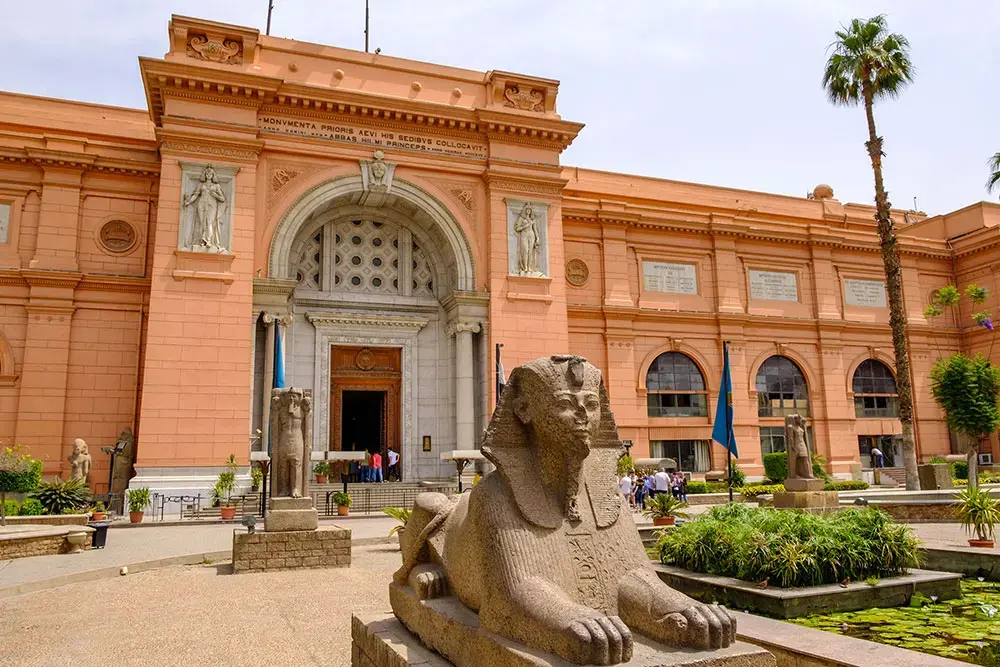
The Egyptian Museum in Tahrir, Cairo: A Timeless Journey Through Ancient Egypt
The Egyptian Museum in Tahrir Square (المتحف المصري بالتحرير) stands as one of Egypt’s most treasured landmarks and a cornerstone of global archaeological heritage. Located on the northeast side of Tahrir Square in the heart of Cairo, the museum has served for over a century as the primary repository for ancient Egyptian artifacts and a gateway into millennia of history.
A Historic Institution
The idea of a national museum for Egyptian antiquities dates back to the mid-19th century. The French Egyptologist Auguste Mariette proposed the concept in 1858, triggering the organization of Egypt’s first formal antiquities collection. Originally housed in Bulaq and later moved to the Khedive Ismail Palace in Giza, the collection finally found its permanent home in Tahrir Square.
In 1895, the Egyptian government held an international competition to design a purpose-built museum. The French architect Marcel Dourgnon won the award and his design became the basis of a grand building that would house Egypt’s archaeological treasures. The cornerstone was laid soon after, and on 15 November 1902, the museum was officially inaugurated by Khedive Abbas Helmi II, making it the first national archaeological museum in the Middle East.
The Collections: A Panorama of Egyptian History
The Egyptian Museum’s holdings—once comprising over 180,000 artifacts—span the full breadth of ancient Egyptian civilization, from prehistoric times through the Pharaonic era to the Greco-Roman period.
Highlights include:
- Prehistoric artifacts such as pottery and tools representing early cultural development before writing.
- Old Kingdom masterpieces, including statues of kings like Khafre and Menkaure.
- The Narmer Palette, a ceremonial slate object symbolizing the unification of Upper and Lower Egypt under King Narmer—a priceless record of early state formation.
- Royal funerary collections, such as the tomb ensembles of Yuya and Thuya and treasures from Tanis.
The displays are arranged on two main floors: heavy statues, coffins, and monumental works on the ground floor; and thematic exhibits including jewelry, everyday objects, and religious artifacts on the upper floor.
Legacy and Cultural Significance
For over a century, the Egyptian Museum has acted as a cultural ambassador for Egypt’s ancient heritage. It helped shape Egyptology as a discipline and inspired museums worldwide with its dedicated design and vast archaeological library and research facilities.
Although many of its most famous pieces—such as portions of the Tutankhamun collection—have been moved to the new Grand Egyptian Museum (GEM) near the Giza Pyramids, the Tahrir museum still retains hundreds of thousands of important artifacts and continues to attract visitors seeking an intimate encounter with history.
Today and Tomorrow
The museum remains a vibrant educational and tourist destination, even as Egypt’s museum landscape evolves. It regularly hosts exhibitions, scholarly activities, and cultural programs that reinforce its role as a bridge between the ancient world and modern audiences.
Despite the opening of new institutions like the Grand Egyptian Museum, the Egyptian Museum in Tahrir Square endures as a symbol of national pride—a timeless treasure that invites visitors to explore the remarkable civilizations that once flourished along the Nile.